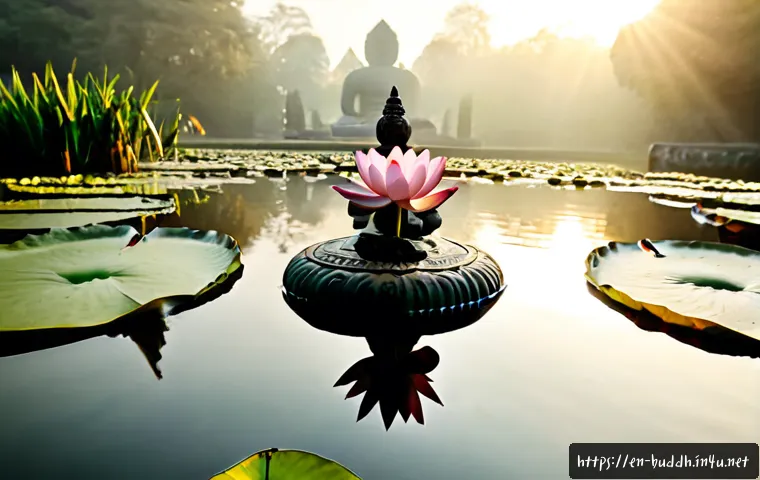
In Buddhism, the lotus commonly represents purity, awakening, and spiritual growth through difficult conditions. Its roots grow in mud while its flower rises above the water, but this image is a broad teaching symbol rather than a universal code for every Buddhist artwork.
Readers interested in Buddhist art, meditation, or temple culture can use lotus imagery as a starting point for deeper study. A well-chosen introductory book, museum guide, meditation class, or cultural program can provide context without reducing the symbol to a decoration.
The most reliable choice depends on whether you want historical knowledge, guided practice, or a closer look at a specific tradition. Before paying for a course, artwork, or retreat, check the teacher or provider, the tradition represented, accessibility, and the full cost.
At a Glance
- The lotus is widely used in Buddhism as an image of awakening, purity, and growth through difficult conditions.
- Its meaning changes with the tradition, region, historical period, figures shown, and ritual setting.
- Books, museum resources, meditation courses, and cultural retreats serve different learning goals and should be compared carefully.
| Learning Option | Best For | Typical Time Commitment | Cost Considerations | What to Check |
|---|---|---|---|---|
| Introductory Buddhist book | Readers seeking a broad foundation | Flexible, self-paced | Compare edition, author background, and format | Whether it distinguishes traditions instead of making universal claims |
| Academic art-history guide | Art lovers and museum visitors | Flexible, often slower reading | Compare scope, illustrations, and library availability | Artwork dates, locations, captions, and cultural context |
| Online meditation course | Beginners wanting guided reflection | Scheduled or self-paced | Review total course fees and access terms | Teacher background, stated tradition, and lesson details |
| Local Buddhist community or museum program | Conversation and direct cultural context | Single visit or recurring sessions | Ask about entry, registration, or donation expectations | Visitor guidance, accessibility, and program purpose |
| Cultural retreat experience | People seeking immersive study or practice | Varies by program | Confirm all fees, lodging, meals, and transport separately | Schedule, leadership, conduct expectations, and cancellation terms |
What the Lotus Represents in Buddhist Thought
The Central Image: Rising From Mud Toward Light
The sacred lotus is commonly identified as Nelumbo nucifera, an aquatic plant with roots in mud and flowers that rise above the water. In Buddhist thought, this visible pattern supports a familiar image of spiritual development. Difficult conditions are not denied or hidden; they are part of the setting from which growth is pictured.
This is why the lotus can be meaningful to readers exploring meditation or Buddhist symbolism. It offers an image of moving through confusion, struggle, or ordinary life without being entirely defined by those conditions. The image is simple, but it should not be turned into a promise that a practice, retreat, or sacred object will produce a particular personal result.
Why Purity Does Not Mean Avoiding Life’s Difficulties
In this context, purity does not have to mean separation from life. The lotus image points instead toward the possibility of clarity and awakening amid changing conditions. Its roots remain in mud, while the flower is seen above the water. That contrast makes the symbol useful, but it does not mean Buddhism treats difficulty as unimportant.
For a quiet meditation prompt, look at a lotus image and ask: What conditions support growth? What parts of experience change? What does it mean to respond with greater clarity? These are reflective questions, not a fixed Buddhist technique or a guaranteed outcome.
Symbolism Versus a Fixed Religious Rule
The lotus is a broad Buddhist symbol, not a single rulebook for reading every image. A lotus may appear as a setting, a pedestal, an offering, or an attribute held by a figure. Its function depends on what else is present in the work.
A useful first question is: What is the lotus doing in this image? A flower beneath a Buddha or bodhisattva may serve as a lotus throne. A flower placed near a figure may be an offering. A flower held in a hand may be an attribute that needs to be read alongside the figure, the site, and the artistic tradition.
How Lotus Meaning Changes Across Buddhist Traditions and Art
Lotus Thrones, Offerings, and Hand-Held Flowers
Buddhas and bodhisattvas are frequently depicted seated or standing on lotus thrones in Buddhist iconography. The throne can create a symbolic setting for an awakened or revered figure. It is not merely background decoration, even though lotus ornament may also appear throughout temple architecture and ritual objects.
When viewing Buddhist sculpture, painting, or temple decoration, begin with the overall composition. Notice whether the lotus supports a figure, appears in a vessel, is offered at an altar, or is held by someone. Then look for accompanying figures, gestures, inscriptions, and the location of the artwork. These details are more useful than assigning a meaning from the flower alone.
Mahayana, Theravada, and Regional Artistic Contexts
The lotus appears across Buddhist traditions, including Mahayana and Theravada contexts, as well as in many regional artistic settings. However, an image from one place or period should not automatically be used to explain another. Local visual conventions, temple practices, artistic materials, and historical settings all shape interpretation.
The Lotus Sutra is an influential Mahayana Buddhist scripture. It is important for many readers studying Mahayana traditions, but it should not be treated as the only source of lotus symbolism throughout Buddhism. A museum guide or a carefully selected Buddhist studies book can be especially helpful when an image belongs to a specific region or period.
Why Color Meanings Need Careful Interpretation
Lotus colors can carry associations in some traditions. Yet there is no single universal interpretation for every lotus color, posture, or number of petals. A color chart found online may be a useful starting point, but it is not enough to explain every painting, statue, or ritual object.
Before repeating a color-based explanation, check whether the source identifies the tradition, artwork, location, and historical context. A careful explanation says what is known about a particular object. A weak explanation treats every lotus image as if it followed one worldwide symbolic system.
A Comparison Guide to Learning About Buddhist Lotus Symbolism
Introductory Books Versus Academic Art-History Guides
An introductory Buddhist book can be a practical choice if you want the broad symbolism of the lotus, basic Buddhist vocabulary, and a readable entry point. Look for an author who explains differences among traditions and avoids presenting one interpretation as universal.
An academic art-history guide may suit readers who want to understand lotus thrones, temple decoration, sculpture, and paintings in context. These books often focus more closely on objects, regions, and visual details. If you are comparing books, check the table of contents, image captions, bibliography, and whether the book clearly identifies its geographic and historical scope.
For a lower-commitment first step, browse a library copy or a museum publication before buying a larger reference book. If purchasing, review the edition and format that best support your reading needs.
Online Meditation Classes, Local Communities, and Museum Programs
An online meditation course may be useful if you want guided reflection around Buddhist imagery and practice. Read the course description closely. It should state the teacher’s background, the tradition or approach being used, the expected level of participation, and what the program actually includes.
A local Buddhist community can provide living context, while a museum program can help you learn to look closely at Buddhist art. These are different experiences. A community gathering may focus on practice and conduct; a museum tour may focus on history, materials, and interpretation. Choose the format that matches your purpose rather than expecting every program to do both.
If you are considering a class or guided program, look for the official information page and review the instructor details, access needs, schedule, and participation expectations before registering.
Value, Time Commitment, and Fee Transparency to Compare
Value is not only about price. A short museum guide may be enough for a visitor preparing for one exhibition. A book may offer more depth for a self-directed learner. A course may provide structure, while a retreat may offer immersion but require more planning.
Before choosing a paid learning resource, compare scope, time commitment, teacher background, accessibility, and total fees. Do not assume that a higher fee means better teaching, deeper tradition, or a more meaningful outcome. Clear program details are a better sign than vague claims about transformation or special access.
Practical Ways to Use Lotus Imagery Respectfully
Meditation Prompts Based on Growth and Impermanence

Lotus imagery can support a simple, respectful reflection. Sit with an image and notice the plant’s relationship to mud, water, stem, and flower. You might reflect on change, conditions, growth, and the difference between an experience and an identity.
Keep the practice modest. A lotus image can be a helpful focus for attention, but it does not guarantee spiritual progress. If you prefer formal instruction, choose a meditation teacher or course that clearly explains its approach and tradition.
Visiting Temples, Museums, and Cultural Sites Thoughtfully
At a temple or cultural site, treat lotus imagery as part of a living religious environment rather than simply a photo backdrop. Follow visitor guidance, pay attention to posted expectations, and observe how the lotus appears alongside statues, offerings, architecture, and ritual objects.
In a museum, read labels before relying on a quick visual assumption. A lotus motif may be symbolic, decorative, ritual, or all of these at once. The object’s caption and curatorial context can prevent a broad explanation from becoming an inaccurate one.
Choosing Artwork or Home Décor Without Reducing It to a Trend
Buddhist-inspired artwork and lotus home décor can be chosen with more care when you know what the image represents and where it comes from. Consider whether the item identifies its artistic source, whether its description avoids exaggerated spiritual claims, and whether it is appropriate for the setting where you plan to place it.
If you are comparing sacred-art reproductions, look for clear information about the original artwork, medium, and cultural context. A thoughtful description is more useful than a generic claim that a lotus design will bring a specific benefit.
Common Misunderstandings and What to Check First
Assuming Every Lotus Has One Color-Based Meaning
The most common mistake is treating color as a complete answer. Some traditions do use color associations, but those associations are not identical across all Buddhist schools, regions, or artworks. Check the source before treating a color chart as an explanation of a specific object.
Treating Social-Media Explanations as Complete Scholarship
Short posts can introduce a symbol, but they often leave out the object’s date, place, tradition, and ritual use. Use them as prompts for further research, not as final interpretation. Museum resources, books with clear references, and programs led by identifiable teachers can provide more context.
Checking Instructor Credentials, Program Details, and Full Costs
Before enrolling in a Buddhist studies course, meditation class, or retreat, check who is teaching, what tradition is represented, and whether the description matches your goals. Review all listed fees and ask what is included. For retreats, confirm practical details such as lodging, meals, transportation, schedule, and participation expectations.
Good information is specific. Be cautious with programs that make broad personal promises while giving little detail about leadership, content, or total cost.
Choosing a Buddhist Learning Resource: Comparison and Decision Summary
Best Options for Casual Readers, Art Lovers, and Meditation Beginners
Casual readers may start with an introductory Buddhist book or a reliable museum guide. Art lovers may benefit most from art-history resources that identify objects, regions, and visual conventions. Meditation beginners may prefer a clearly described class with an instructor whose background and approach are easy to verify.
A cultural retreat may suit someone seeking an immersive experience, but it requires the most careful review of logistics, conduct expectations, accessibility, and total fees. It is not automatically a better educational choice than a book, class, or museum program.
Questions to Ask Before Paying for a Course or Retreat
Ask these questions before making a decision:
- Who teaches or leads the program, and what background is provided?
- Which Buddhist tradition or cultural context does the program represent?
- Is the material designed for beginners, art learners, practitioners, or travelers?
- What access needs, schedule requirements, or participation expectations should be considered?
- What are the total fees, and what is included or excluded?
A Simple Checklist for Respectful, Reliable Next Steps
Choose the resource that fits your actual goal. Verify the provider rather than relying on promotional language. Prefer explanations that identify context over claims that every lotus has one fixed meaning. For books, courses, art reproductions, or retreat programs, check the official details page for full conditions before purchasing or registering.
Closing Thoughts
The Buddhist lotus is powerful because it can hold a broad image of awakening and growth without denying difficult conditions. At the same time, its meaning is never fully contained in a color chart or a single sentence. Looking at the tradition, setting, and function of an image leads to a more accurate understanding. Whether you learn through a book, a museum, a meditation course, or a cultural visit, context is the most respectful place to begin.
Useful Things to Know
1. The sacred lotus is commonly identified as Nelumbo nucifera.
2. A lotus in Buddhist art may be a throne, offering, setting, decorative motif, or an attribute held by a figure.
3. The Lotus Sutra is influential in Mahayana Buddhism, but it does not explain all lotus symbolism across Buddhism.
4. Museum labels and well-contextualized books can help distinguish broad symbolism from a specific artwork’s meaning.
Important Notes
There is no universal interpretation for every lotus color, petal count, or artistic pose. The meaning of a Buddhist lotus image depends on its tradition, location, period, accompanying figures, and ritual context. Personal benefits from meditation, sacred objects, classes, or retreats cannot be guaranteed. Product quality, instructor qualifications, and retreat standards should always be checked individually.
Frequently Asked Questions
Q1. What does the lotus flower symbolize in Buddhism?
A1. The lotus commonly symbolizes purity, awakening, and spiritual development through difficult conditions. Its roots grow in mud while its flower rises above the water, creating an image of growth without being defined by hardship. The precise meaning still depends on the Buddhist tradition and the context of the image.
Q2. Do different lotus colors have different Buddhist meanings?
A2. Lotus colors can carry associations in some Buddhist traditions, but those meanings are not identical across all schools, regions, or artworks. Do not assume that a color has one fixed meaning everywhere. Check the specific tradition, object, location, and source before drawing a conclusion.
Q3. Is a Buddhist book, online course, or retreat the best way to learn about lotus symbolism?
A3. The best option depends on your goal. An introductory book is useful for flexible foundational reading, an art-history guide can provide visual and regional context, and an online course can offer structured meditation or study. A retreat may provide immersion, but review the teacher background, tradition, accessibility, program details, and total fees before committing.