
In a time when the mysteries of the universe captivate scientists and dreamers alike, ancient wisdom offers surprising insights that resonate with modern cosmology.

Buddhism, with its profound reflections on existence and interconnectedness, provides a unique lens to explore the vastness of space and time. As recent discoveries challenge our understanding of reality, revisiting these age-old teachings reveals fascinating parallels that enrich our cosmic perspective.
Join me as we delve into how Buddhist philosophy illuminates contemporary universe theories, blending spirituality with science in a way that inspires awe and curiosity.
This journey promises to expand not only our knowledge but also our sense of wonder about the cosmos.
The Dance of Impermanence Across Scales
Seeing Change in the Cosmic Tapestry
Impermanence is a cornerstone of Buddhist thought, emphasizing that all phenomena are in constant flux. When I first connected this with cosmology, I was struck by how the universe itself embodies this principle.
Stars are born, live out their brilliant lives, and fade away, galaxies collide and reshape, and even the fabric of space-time stretches and bends. This cosmic dance mirrors the Buddhist view that clinging to permanence leads to suffering.
On a personal level, reflecting on the impermanence of the universe helped me appreciate the fleeting beauty of moments in life, much like the transient glow of a supernova.
It’s humbling and comforting to realize that change is the only constant, whether at the scale of our daily lives or the vast cosmos.
Cycles of Creation and Dissolution
Buddhist cosmology speaks of cycles—worlds arising and passing away in endless rounds. Modern astrophysics also recognizes cycles, such as the birth and death of stars and the expansion and potential contraction of the universe itself.
These cycles aren’t just abstract ideas; they are observable processes documented through telescopes and satellites. From my experience studying astrophysics, the idea of cosmic cycles resonates deeply with the Buddhist notion of samsara, the continuous cycle of birth, death, and rebirth.
While the scientific view is framed in physical terms and Buddhist teachings in spiritual ones, both perspectives remind us that beginnings and endings are woven into the fabric of existence.
Interconnectedness in the Vast Expanse
Buddhism teaches that all things are interconnected—nothing exists in isolation. This principle shines a new light on the cosmic web of galaxies, dark matter, and energy.
When I considered the vast networks of matter and energy that connect distant stars and galaxies, I couldn’t help but see a reflection of dependent origination.
For instance, the heavy elements in our bodies were forged in ancient stars, linking us physically to the cosmos. This interconnectedness is not merely poetic; it’s a tangible truth affirmed by both spiritual insight and scientific discovery.
Realizing this connection can deepen our sense of belonging to the universe and foster a profound respect for all life.
Perception and Reality: Questioning the Nature of Existence
The Illusion of a Fixed Self
Buddhist philosophy challenges the notion of a permanent, unchanging self, describing it instead as a fluid process shaped by countless causes and conditions.
Interestingly, this idea parallels recent quantum physics insights, where particles do not have fixed properties until observed. Reflecting on this, I found that both perspectives invite us to rethink identity and reality itself.
The self, much like the universe, is dynamic and relational rather than static. This understanding can be liberating, encouraging flexibility in how we see ourselves and the world around us.
Observer and Observed: A Cosmic Dialogue
In quantum mechanics, the act of observation influences the state of particles, blurring the line between observer and observed. Buddhism similarly emphasizes mindfulness and awareness, suggesting that our perception shapes our experience of reality.
I’ve noticed in my meditation practice that heightened awareness changes how I relate to my surroundings, almost like participating in a co-creative process.
This overlap between inner experience and outer reality highlights a profound link: consciousness is not separate from the cosmos but an integral part of it.
Emptiness as a Foundation for Possibility
The concept of emptiness (śūnyatā) in Buddhism points to the absence of inherent, independent existence in all phenomena. This is not nihilism but an openness to infinite potential.
In cosmology, the quantum vacuum—far from being empty—is a seething field of possibilities from which particles spontaneously arise. Drawing from both views, I see emptiness as fertile ground for creativity and transformation, whether in the birth of stars or personal growth.
This shared insight invites us to embrace uncertainty and change as natural and necessary forces.
Exploring the Boundaries of Time and Space
Timelessness Beyond Linear Understanding
Our everyday experience frames time as a linear progression, but both Buddhist meditation and cosmology suggest more complex realities. Deep meditation can reveal a sense of timelessness, where past, present, and future dissolve into a unified experience.
Similarly, cosmologists propose models where time itself may be an emergent property or loop back on itself. Encountering these ideas firsthand felt like stepping beyond ordinary limits, opening a portal to a more expansive understanding of existence.
It’s thrilling and a little disorienting to consider that time might not be as fixed as we think.
Non-Duality of Space and Consciousness
Buddhist teachings often emphasize non-duality—the idea that subject and object, self and other, are not fundamentally separate. This resonates with theories in physics that propose the fabric of space-time is deeply intertwined with energy and information.
When I studied black holes and the holographic principle, I saw echoes of this non-dual perspective, where boundaries between inside and outside blur.
This challenges our conventional categories and invites us to explore reality as a seamless whole, where space and consciousness may be facets of the same underlying reality.
Expanding Horizons Through Meditation and Science
Meditative practices provide experiential insight into the nature of mind and reality, complementing scientific investigation. I’ve personally found that combining meditation with scientific curiosity enhances my appreciation of both fields.
While science maps the cosmos with instruments, meditation offers a direct encounter with the inner universe. Together, they expand horizons, revealing that exploration is not just outward but inward as well.
Harmony Between Mindfulness and Cosmic Discovery
Attuning to the Present Moment on a Universal Scale
Mindfulness—being fully present—may seem like a simple practice, but its implications ripple far beyond daily life. When contemplating the cosmos, mindfulness grounds us amidst vastness, enabling a deeper connection to the awe and mystery of the universe.
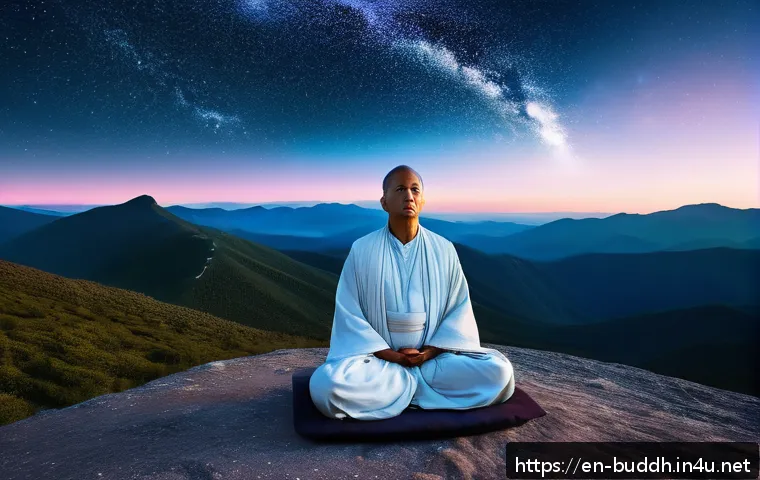
I recall moments lying beneath the night sky, feeling simultaneously small and connected, where mindfulness transformed observation into reverence. This practice fosters a balance between curiosity and humility, essential for meaningful exploration.
Ethical Reflections Inspired by Cosmic Interdependence
Understanding the universe’s interconnected nature invites ethical considerations. If we recognize that our actions ripple through the cosmic web, it encourages responsibility toward the environment and all beings.
From my perspective, this cosmic mindfulness enriches traditional ethical frameworks by situating them within a vast, interwoven reality. It’s not just about human relationships but our place in a larger ecological and cosmic context.
Science and Spirituality as Partners in Wonder
Rather than conflicting, scientific inquiry and spiritual insight can complement and inspire each other. My experience engaging with both has shown me that they share a common goal: seeking truth and understanding.
Science provides tools and frameworks, while spirituality nurtures meaning and connection. Embracing this partnership cultivates a sense of wonder that sustains curiosity and humility in the face of the unknown.
Bridging Inner and Outer Universes
The Microcosm Within the Macrocosm
Buddhist teachings often describe the individual as a microcosm reflecting the macrocosm of the universe. This concept took on new meaning for me when I learned about fractals and self-similarity in nature—patterns repeating at different scales.
The structure of neurons in the brain, the spiral of galaxies, even weather systems all show these patterns. Recognizing this fractal harmony deepens the connection between our inner worlds and the vast cosmos, suggesting that exploring one can illuminate the other.
Transformative Power of Contemplative Science
Integrating contemplative practices with scientific study can transform how we engage with both. For example, scientists who practice meditation report enhanced focus and creativity, while spiritual practitioners gain insights from scientific knowledge.
I’ve witnessed this synergy firsthand, as it fosters openness, patience, and a richer understanding of complexity. This fusion encourages a more holistic approach to knowledge, honoring both empirical evidence and subjective experience.
Charting New Frontiers of Understanding
The intersection of ancient wisdom and modern science opens doors to new questions and possibilities. Rather than settling for fixed answers, this dialogue encourages ongoing exploration.
For me, this has meant embracing uncertainty as fertile ground for discovery—both in the universe and within myself. It’s a journey that invites us all to become explorers of mystery, blending curiosity with reverence.
Comparing Key Concepts: Ancient Insights and Modern Science
| Concept | Buddhist Perspective | Modern Scientific View |
|---|---|---|
| Impermanence | All things are transient and constantly changing; attachment causes suffering. | Stars, galaxies, and cosmic structures form, evolve, and decay over time. |
| Interconnectedness | Everything arises dependent on conditions; nothing exists independently. | Cosmic web connects galaxies; matter and energy are interrelated. |
| Emptiness | No inherent, independent existence; potential for transformation. | Quantum vacuum is a dynamic field giving rise to particles and energy. |
| Self and Identity | No fixed self; identity is a process influenced by causes and conditions. | Quantum particles lack definite properties until measured; identity is relational. |
| Time | Time is fluid; deep meditation reveals timeless awareness. | Time may be emergent or nonlinear in cosmological models. |
Embracing Mystery with Openness and Awe
The Limits of Knowledge and the Joy of Wonder
Both Buddhist philosophy and cosmology remind us that ultimate reality may be beyond full comprehension. Accepting this can feel unsettling, but it also opens space for awe and humility.
Personally, I find joy in the mystery itself—the vast unknown that invites continual questioning and learning. This attitude transforms the quest for understanding into a living adventure, rich with surprises and insights.
Finding Balance Between Skepticism and Belief
Navigating between rigorous scientific skepticism and spiritual openness can be challenging. Yet, both approaches are vital for a balanced worldview. From experience, maintaining curiosity without rigid certainty allows ideas to evolve naturally.
This balance fosters resilience and creativity, enabling us to integrate diverse perspectives without losing grounding.
Living in Harmony with the Cosmic Flow
Ultimately, embracing the insights from both ancient wisdom and modern science encourages living in harmony with the universe’s rhythms. This means cultivating compassion, mindfulness, and respect for all forms of life while pursuing knowledge.
It’s a dynamic, ongoing process that enriches our existence and deepens our connection to the cosmos.
In Closing
Exploring the interplay between Buddhist philosophy and modern cosmology reveals a profound unity in understanding impermanence, interconnectedness, and the nature of existence. This journey invites us to embrace change with curiosity and humility, enriching both our inner and outer worlds. Ultimately, it encourages living in harmony with the cosmic flow, finding meaning in mystery and transformation.
Helpful Information to Remember
1. Impermanence is a universal principle, evident both in spiritual teachings and cosmic phenomena, reminding us to appreciate the present moment.
2. Interconnectedness links all things, from the smallest particles to the vast galaxies, fostering a sense of belonging and responsibility.
3. Emptiness, far from being emptiness in a nihilistic sense, opens possibilities for creativity and growth on both personal and cosmic levels.
4. The fluidity of self and time challenges fixed notions, inviting flexibility in how we perceive identity and existence.
5. Combining mindfulness with scientific inquiry enriches our understanding and deepens our experience of wonder and discovery.
Key Takeaways
Recognizing the shared insights of ancient wisdom and modern science helps us navigate life with openness and balance. Impermanence and interdependence shape our reality, encouraging mindful living and ethical awareness. Embracing uncertainty fosters resilience and curiosity, while the integration of contemplative practice with scientific exploration offers a holistic path to deeper understanding and connection.
Frequently Asked Questions (FAQ) 📖
Q: uestionsQ1: How does Buddhist philosophy relate to modern cosmology?
A: Buddhist philosophy and modern cosmology both explore the nature of existence, though from different angles. Buddhism emphasizes interconnectedness and impermanence, concepts that resonate with scientific views of the universe as dynamic and ever-changing.
For example, the Buddhist idea that everything is interdependent parallels the scientific understanding of cosmic webs linking galaxies. This connection enriches our grasp of the cosmos by blending spiritual insight with empirical discovery, offering a more holistic appreciation of reality.
Q: Can ancient Buddhist teachings actually influence contemporary scientific theories?
A: While Buddhist teachings are not scientific theories themselves, they provide a valuable philosophical framework that encourages open-mindedness and deep reflection on existence.
Scientists often draw inspiration from such perspectives to challenge assumptions and explore new ideas. For instance, notions of emptiness and non-self in Buddhism invite reconsideration of what constitutes reality, which aligns with the quantum mechanics view that particles exist in probabilistic states until observed.
This cross-pollination fosters creativity and humility in scientific inquiry.
Q: What practical benefits can we gain from combining spirituality and science when studying the universe?
A: Integrating spirituality with science cultivates a sense of wonder and connectedness that pure data alone might not evoke. Personally, I’ve found that reflecting on Buddhist concepts while learning about cosmic phenomena deepens my appreciation and keeps me engaged longer.
This fusion also promotes mental well-being by reducing existential anxiety; understanding the vastness and impermanence of the universe can inspire mindfulness and acceptance.
Ultimately, this blend encourages curiosity and emotional balance, enhancing both intellectual and personal growth.